









Ponnunjal
Silk Cotton


Intro
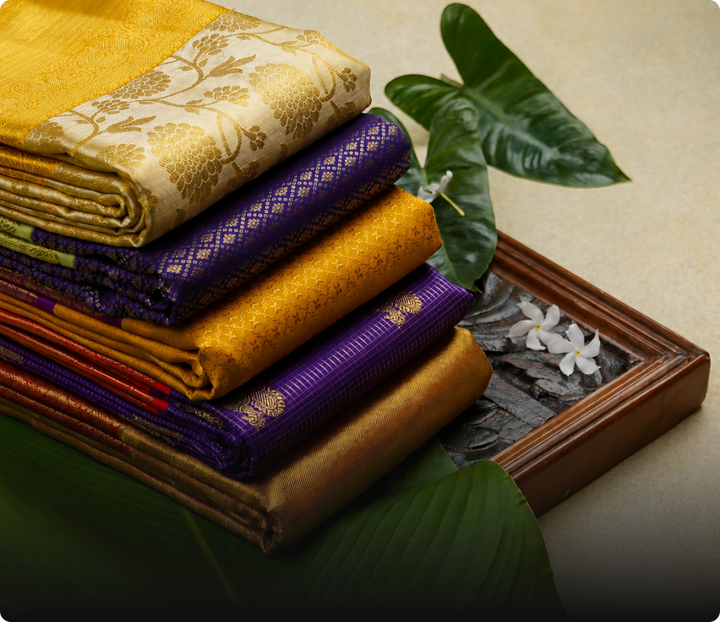
A silk cotton saree — often called “sico” in Kanchipuram — is woven using a blend of silk and cotton yarns, giving it a lighter, more breathable drape than a pure silk Kanjivaram while still carrying silk's natural sheen and structure. It isn't a pure cotton saree; the silk content is exactly what gives it its subtle shine, body, and durability. Every silk cotton saree here is handwoven by our Kanchipuram weaver families and carries Silk Mark certification confirming genuine silk content, not synthetic blends.
Understanding Silk Cotton Weaves
Silk cotton sarees in this collection come in a few distinct patterns. Palum pazhamum (“milk and fruit”) is a classic two-tone design where the body and border shift between two contrasting shades in a soft gradient effect. Vaira oosi brings its fine rippled border technique to the lighter silk-cotton base for an understated traditional look. Some pieces use korvai construction for a more defined contrast border. Because the base fabric is lighter than pure silk, these weaves read slightly differently than they would on a traditional Kanjivaram — softer, with more drape.
When to Wear a Silk Cotton Saree
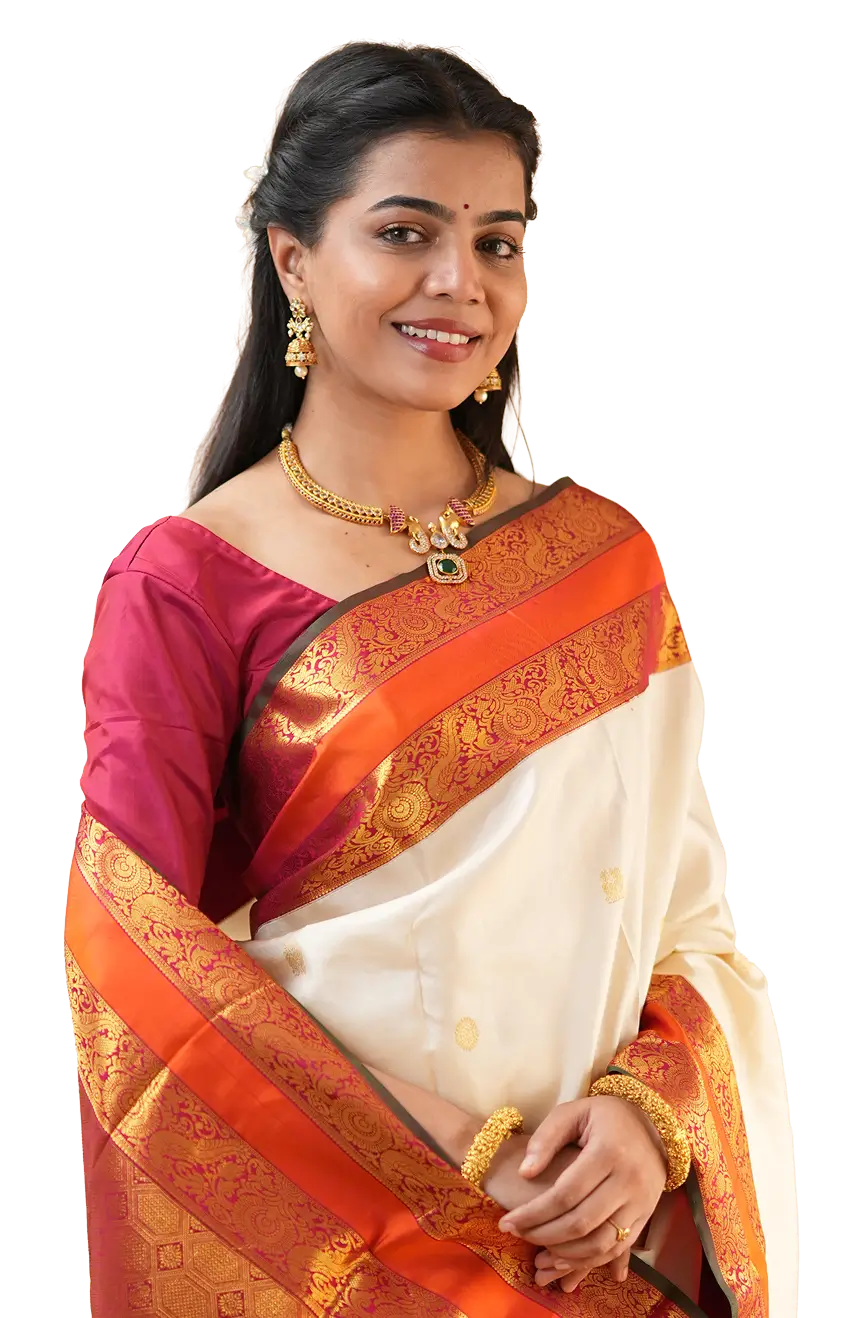
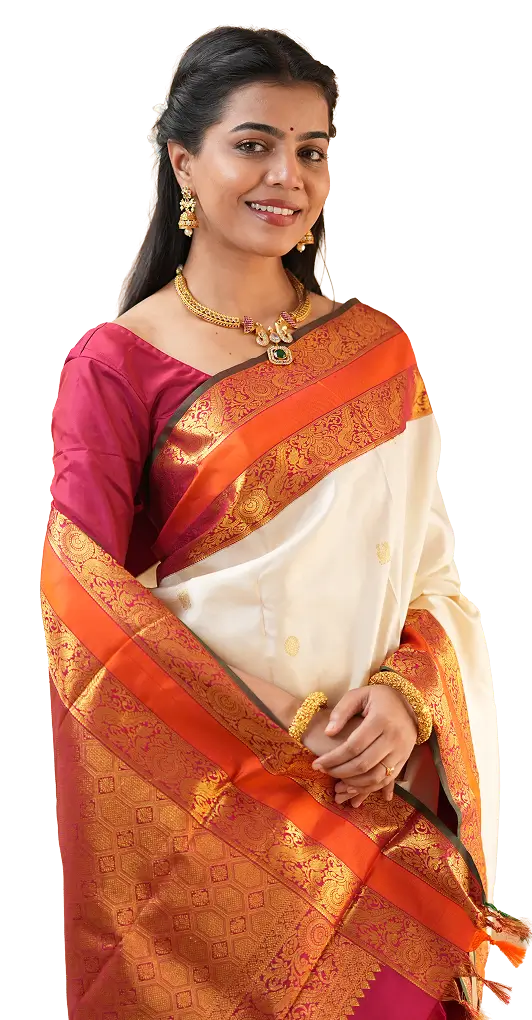
The lighter weight makes silk cotton sarees ideal for long days — office wear, baby showers, and daytime functions where a heavier bridal-weight silk would feel like too much. Pair with lighter jewellery and a simple blouse to let the two-tone weave speak for itself, or dress it up for festive occasions with a contrast blouse.
Care & Authenticity
Because silk cotton blends cotton fibre with silk, it typically needs slightly gentler handling than pure silk — always dry clean rather than wash to protect both fibres. Genuine silk cotton has a soft sheen concentrated in the silk portions of the weave, with a more matte, breathable feel where cotton dominates. Full guidance: Saree Wash & Silk Care.


